


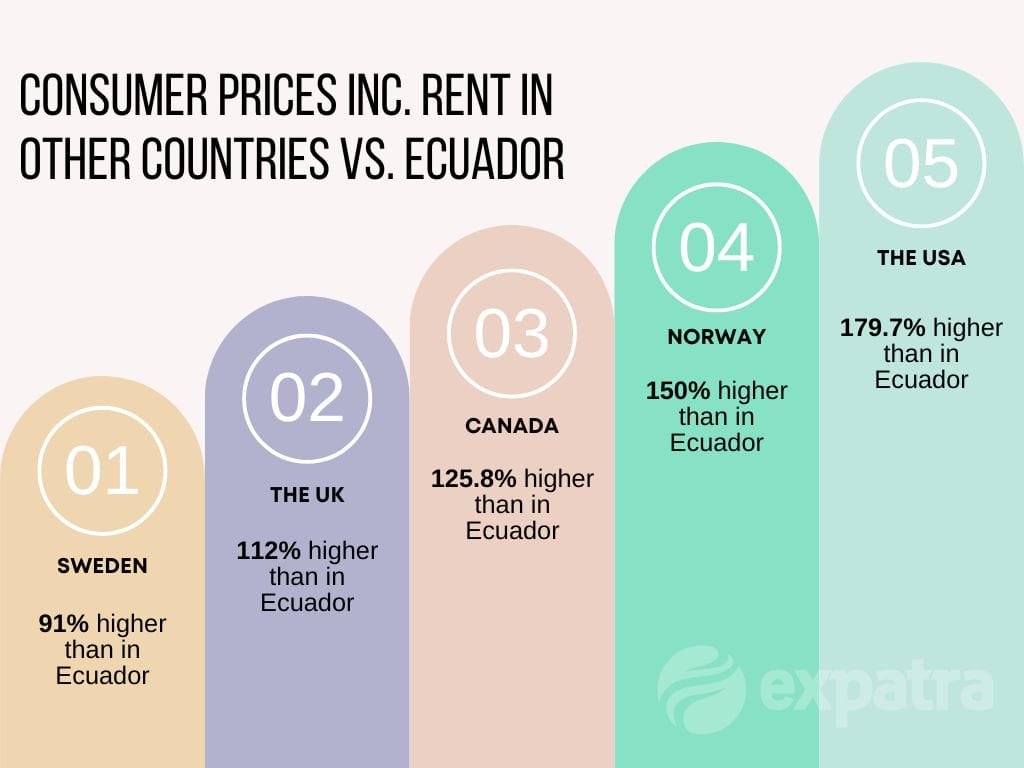
The cost of living in Ecuador depends on where you live, the kind of housing you choose and how closely your spending habits match local prices. A single person renting a furnished apartment in a popular expat neighborhood may have a very different budget from a family living in a smaller city or someone who owns a home. Ecuador uses the US dollar, which makes many prices easy for visitors from the United States to understand, but dollarization does not mean every service costs the same as it would in the US.
Housing: Usually the Biggest Variable
Rent is often the most important part of a monthly budget. Prices vary by city, neighborhood, size, furnishing, security, proximity to the coast or city center, and whether utilities or building services are included. Quito, Guayaquil, Cuenca, Manta and smaller towns each have different rental markets, and two apartments in the same city can have very different costs. Before agreeing to a rental, clarify the deposit, contract length, maintenance responsibilities, internet, water, electricity and any building fees. For longer stays, compare actual local listings rather than relying on a national average.
Groceries and Eating Out
Shopping at supermarkets, municipal markets, neighborhood stores and specialty shops can produce different totals. Fresh produce and some locally grown foods may be economical when bought in season, while imported products, specialty diets and familiar international brands can cost more. Eating at local restaurants or small lunch spots can be less expensive than dining at tourist-oriented venues, but prices vary by city and setting. Build a realistic food budget based on what you actually eat rather than assuming that every grocery item is cheap.
Transportation
Your transport budget depends on whether you use buses, taxis, ride-hailing services, intercity coaches or a private vehicle. Public transport may reduce daily costs, but it may not suit every route or schedule. If you plan to own a car, account for fuel, insurance, maintenance, parking and potential repairs—not only the purchase price. Intercity travel and trips to remote areas can add up, especially if you travel frequently.
Utilities, Internet and Mobile Service
Ask whether electricity, water, gas, internet and building fees are included in rent. Utility costs can change with household size, air-conditioning use, water heating, appliances and local service arrangements. Coastal homes that use air conditioning heavily may have different electricity bills from naturally cooler highland homes. Compare internet speed and reliability at the exact address, particularly if you work remotely or depend on video calls.
Healthcare and Insurance
Healthcare spending depends on your insurance arrangement, access to public or private providers, medications and the services you need. New residents should research eligibility, coverage limits, exclusions, waiting periods and how emergencies are handled before choosing a plan. Do not assume that a low monthly premium covers every procedure or that a particular provider is available in every city. Keep a separate reserve for unexpected medical or dental costs.
Lifestyle, Leisure and Family Costs
Gym memberships, childcare, international schools, pet care, entertainment and imported hobbies can substantially change a household budget. Families should research school fees and transport before moving. Pet owners should consider veterinary care, food and travel arrangements. People who socialize frequently, take weekend trips or maintain two homes should budget for those patterns explicitly.
A Practical Monthly Budget Method
Instead of relying on a single headline number, build three scenarios: essential, comfortable and higher-spending. For each, estimate rent, utilities, groceries, transport, healthcare, phone and internet, personal spending, and savings. Add irregular expenses such as visa paperwork, furniture, annual insurance payments, travel, repairs and deposits. Keep an emergency fund in addition to the amount needed to establish a new home.
How to Compare Cities Fairly
Compare equivalent lifestyles rather than city names alone. A cheaper apartment far from work may create higher transport costs. A furnished rental may have a higher monthly price but lower move-in expenses. A coastal home may require more cooling, while a highland home may need different clothing or heating arrangements. The best location is the one that fits your income, work, health needs, transport requirements and preferred lifestyle.
Where to Find Reliable Price Information
Use current rental listings, local supermarkets, transport providers and service quotes to build your budget. Cost-of-living databases can offer a broad reference, but many rely on user submissions and may not represent every neighborhood or household. Record when you checked each price and update your estimates before moving. For visa, tax and healthcare rules, use official government or provider sources rather than social media anecdotes.
Ecuador can suit a range of budgets, but there is no universal monthly cost that applies to everyone. Housing, location, healthcare, transportation and lifestyle are the biggest variables to research. Build a budget from current local prices, allow for setup costs and emergencies, and compare real options before making a long-term commitment.



One Comment