
Ecuador uses the United States dollar as its official currency. Visitors can pay in US dollars, and prices are generally displayed in dollars and cents. But this was not always the case. Before 2000, Ecuador used the sucre, a national currency that lost much of its value during a severe economic and banking crisis in the late 1990s. The transition to the US dollar—known as dollarization—changed how prices, wages, savings and financial contracts were expressed.
The Sucre and Its Place in Ecuadorian History
The sucre was introduced in the nineteenth century and named after Antonio José de Sucre, a military and political figure associated with South America’s independence movements. For decades, it was Ecuador’s national currency. Like any currency, its value depended on economic conditions, confidence and monetary policy. By the late 1990s, Ecuador was facing a severe crisis that put growing pressure on the sucre and the banking system.
What Caused the Crisis?
Ecuador’s late-1990s crisis had multiple causes. Economic shocks, the effects of El Niño on infrastructure and production, declining oil prices, fiscal pressures, financial-sector weaknesses and political instability all contributed to the situation. Banks came under intense stress, the economy contracted and confidence in the sucre weakened. Many people sought to protect their savings by converting money into US dollars where they could, a process sometimes described as informal or de facto dollarization.
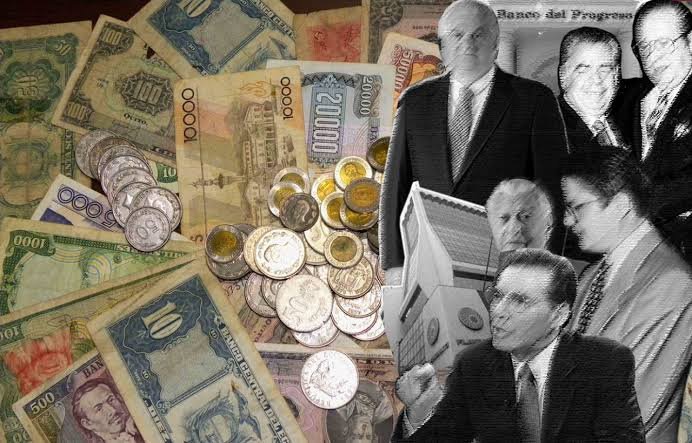
The 1999 Banking Crisis
In March 1999, the government declared a banking holiday amid mounting financial turmoil, and restrictions on access to deposits caused severe hardship for many households and businesses. The crisis damaged confidence in financial institutions and intensified the economic emergency. For people whose savings or income were held in sucres, rapid depreciation made it difficult to preserve purchasing power. The consequences extended beyond banks into employment, poverty, migration and household security.
The Decision to Dollarize in 2000
In January 2000, President Jamil Mahuad announced that Ecuador would adopt the US dollar as legal tender. The policy was implemented during a period of extraordinary instability, and Mahuad left office later that month. His successor, Gustavo Noboa, continued the transition. On January 10, 2000, the Central Bank established a conversion rate of 25,000 sucres for one US dollar. The Economic Transformation Law, approved in March 2000, supplied an important legal framework for the new monetary regime.
How the Conversion Worked
The fixed conversion rate meant that monetary amounts in sucres were converted into dollars using the established rate. For example, 250,000 sucres equaled US$10 at the official conversion rate. The change required businesses, banks and public institutions to adapt their accounting and contracts. Sucre notes were gradually withdrawn from circulation, while the dollar became the unit used for prices and most everyday financial transactions. Ecuador also retained local centavo coins for small transactions, backed under the dollarization framework.
Why Choose the US Dollar?
Supporters argued that dollarization could restore monetary stability, reduce the risk of continued depreciation and rebuild confidence after the crisis. Using a widely accepted currency also removed exchange-rate risk between the sucre and the dollar for domestic transactions. However, dollarization was not a quick fix for every economic problem. It did not erase the losses and hardship caused by the crisis, nor did it eliminate the need for sound fiscal policy, resilient banks and productive economic growth.
What Changed for Ordinary People?
Dollarization made everyday prices and wages easier to compare with US-dollar values, but the transition was difficult. People had to adjust to a new scale of prices, and the conversion of incomes, savings and debts had real consequences depending on when and how those amounts were held. The crisis had already reduced purchasing power for many families. It is therefore inaccurate to describe dollarization only as a technical currency change: it was a major social and economic turning point.
How Ecuador’s Currency Works Today
The US dollar is used for salaries, purchases, bank accounts and most prices. Ecuador issues its own centavo coins for small denominations, while US coins and banknotes also circulate. Travelers should carry smaller notes for taxis, markets and small businesses, because a shop may not have change for a large bill. Damaged or suspicious banknotes may be refused, and card acceptance varies by business and location. ATMs are available in many urban areas, but availability can be more limited in smaller towns and remote destinations.
Benefits and Limitations of Dollarization
Dollarization removes the option of financing government spending by issuing a national currency and limits independent monetary policy. Ecuador cannot devalue a domestic currency in the way a country with its own floating currency might. Adjustments to economic shocks must therefore occur through other channels, including fiscal policy, productivity, employment and prices. At the same time, the dollar provides a familiar unit of account and can support confidence when monetary instability has been severe. The overall outcome depends on much more than the currency alone.
Conclusion
Ecuador’s adoption of the US dollar in 2000 followed a profound banking and economic crisis. The sucre’s decline, frozen deposits and widespread uncertainty made the transition a defining moment in modern Ecuadorian history. Today, visitors can use dollars for everyday purchases, but understanding how dollarization happened helps explain the country’s recent economic past and the role currency stability plays in daily life.